Integrity FIRST
Subsidiary Sites

Sustainability
In the face of accelerating global carbon neutrality goals and the deep integration of the circular economy, FIRST, as a global leader in PV encapsulation materials, actively leverages its strengths in the PV industry to embrace change. We regard ESG as one of the core drivers of our long-term value creation. We are deeply aware of the responsibilities and mission we shoulder. In response to the call of the times and the transformation of our industry, we remain committed to approaching ESG and sustainability from a perspective of growth and opportunity, actively advancing our corporate responsibility and sustainability efforts.
Sustainability Policy
In the face of accelerating global carbon neutrality goals and the deep integration of the circular economy,
FIRST, as a global leader in PV encapsulation materials, actively leverages its strengths in the PV industry to embrace change. We regard ESG as one of the core drivers of our long-term value creation.
We are deeply aware of the responsibilities and mission we shoulder. In response to the call of the times and the transformation of our industry, we remain committed to approaching ESG and sustainability from a perspective of growth and opportunity,
actively advancing our corporate responsibility and sustainability efforts.

Innovation-driven & Green Development
Digital Innovation & Intelligent Operations
Compliance Management & Steady Development
Photovoltaic Empowerment & Low-Carbon Circulation
Innovation-driven & Green Development,
Continuously drive technological innovation, optimize products and services, and actively promote technological advancements in the global clean energy industry.
Sustainability Objectives
1
Strengthen Technological Innovation
Increase R&D investment to develop high-efficiency innovative products, contributing to clean energy initiatives and dual carbon goals.

2
Deepen Green Operation Strategy
Optimize production processes, improve energy efficiency, reduce resource consumption and waste, and promote circular economy practices to build a sustainable ecosystem.

3
Build a Sustainable Supply Chain
Adopt digital supplier management to embed sustainability principles and collaborate on creating an ethical, green, and sustainable supply chain network.

4
Focus on Employee Development
Safeguard occupational health and rights, foster equality and diversity, and cultivate globally competitive talent with multidisciplinary expertise.

5
Fulfill Social Responsibilities
Strengthen community engagement and university partnerships, leverage PV industry strengths to support vulnerable groups, and drive social progress.
Response to UN Sustainable Development Goals
We actively support and respond to the United Nations Sustainable Development Goals (SDGs), ensuring that our operations are aligned with global sustainability initiatives. We proactively seek connections between our business practices and the SDGs, focusing on key goals such as Gender Equality, Industry, Innovation and Infrastructure, Responsible Consumption and Production, and Climate Action, among others.


Leverage PV industry strengths to build long-term poverty alleviation mechanisms by donating distributed PV systems.
Develop agrivoltaic projects to deliver clean energy while sustaining agriculture.
Provide health checks, wellness consulting, and emergency training to ensure employee health and safety.
Support education through funds and offer diverse skill and academic training for employees.
Promote diversity, equality, and inclusion; prevent discrimination and harassment; empower women in management.
Support rural revitalization through targeted agricultural assistance and effective aid programs.
Participate in community welfare and donate to programs for the elderly and children.



Strengthen core competitiveness to maintain industry leadership and achieve solid performance.
Drive innovation under the principle of “Innovative technology for the future,” with continuous R&D investment.
Protect intellectual property and build a robust patent portfolio with collaborative R&D.
Ensure product and service quality while safeguarding data security and customer privacy.
Build a responsible and sustainable green supply chain with enhanced safety management.
Strengthen risk management and internal control; uphold business ethics and anti-corruption mechanisms.
Collaborate with stakeholders to advance shared sustainable development.



Conduct company-wide GHG inventories, perform carbon accounting and assess carbon footprints of core products.
Invest in distributed PV projects to increase renewable energy use in operations.
Explore the maximum utilization of resources and the minimization of waste emissions; promote circular economy with partners.
Optimize production, upgrade smart equipment, and improve energy efficiency across divisions.
Develop water purification membrane materials for desalination and wastewater applications.
Innovate PV encapsulation materials to enhance industry efficiency and reduce costs.
Champion climate action, actively practice the "Solar-for-Solar" Negative Carbon Earth vision.
Response to Climate Change
We acknowledge the profound impact of climate change on human society and the natural environment. The challenges it brings, like rising sea levels and extreme weather events, pose unprecedented challenges to global economic structures and business operations.
Hence, we view climate change as a core strategic consideration, aiming to mitigate its adverse effects and actively seek opportunities to contribute to society's transition to low-carbon, green development. As an active participant in the renewable energy sector, our PV films backsheets, essential for module encapsulation and protection, not only optimize PV conversion efficiency but also significantly extend the modules' lifespan. Though our production activities consume energy, they translate into clean energy output through PV generation, offering environmental returns exponentially.

Solar-for-Solar Negative Carbon Earth
We are committed to the sustainable development concept of "SOLAR FOR SOLAR—Negative Carbon Earth," implementing energy conservation and emission reduction in operations and optimizing our energy mix. Our technological innovation and green product development support and propel the industry and society toward more sustainable development.
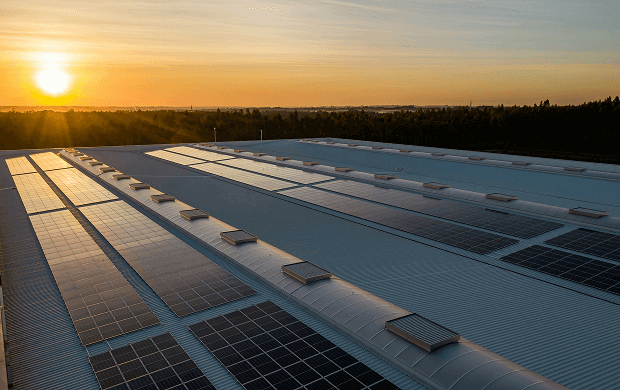
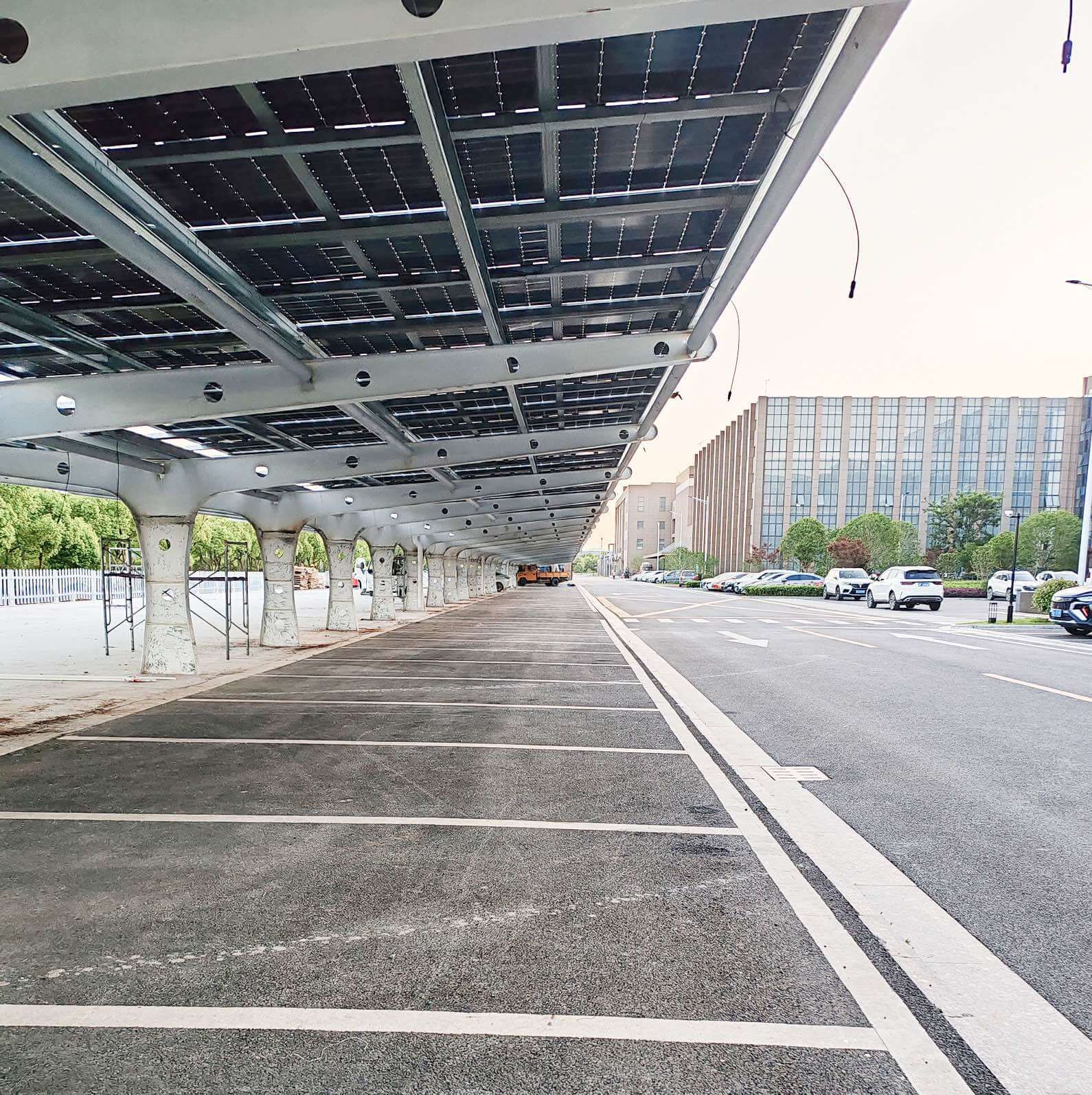
For instance, we've built distributed power generation systems on our factory roofs to lessen traditional energy dependency, while also diversifying our business by developing various types of photovoltaic stations. We believe such efforts not only promote the widespread adoption of clean energy and contribute to global energy transformation and climate change mitigation but also create new growth opportunities and value for our long-term development.
As a dedicated player in the green energy sector, FIRST specializes in manufacturing photovoltaic (PV) encapsulant films and backsheets - critical components that protect and enhance PV modules' efficiency and lifespan.
Through continuous technological innovation and cost optimization, we deliver high-performance solutions that empower PV module manufacturers to improve cost-efficiency, strengthen solar energy's market competitiveness, and accelerate the transition to a clean, low-carbon energy ecosystem, thereby supporting ecological conservation and environmental stewardship. In , FIRST sold Billion m² of PV encapsulant materials, enabling GW of module production. Based on coal-power equivalency, these modules will reduce approximately million tons of carbon dioxide emissions.
Photovoltaic Film Sales
28.11
< Billion m² >
of Module Production Enabled
296
< GW >
Estimated CO₂ Emission Reduction
2.95
< Million tons >
*Data for the full year of
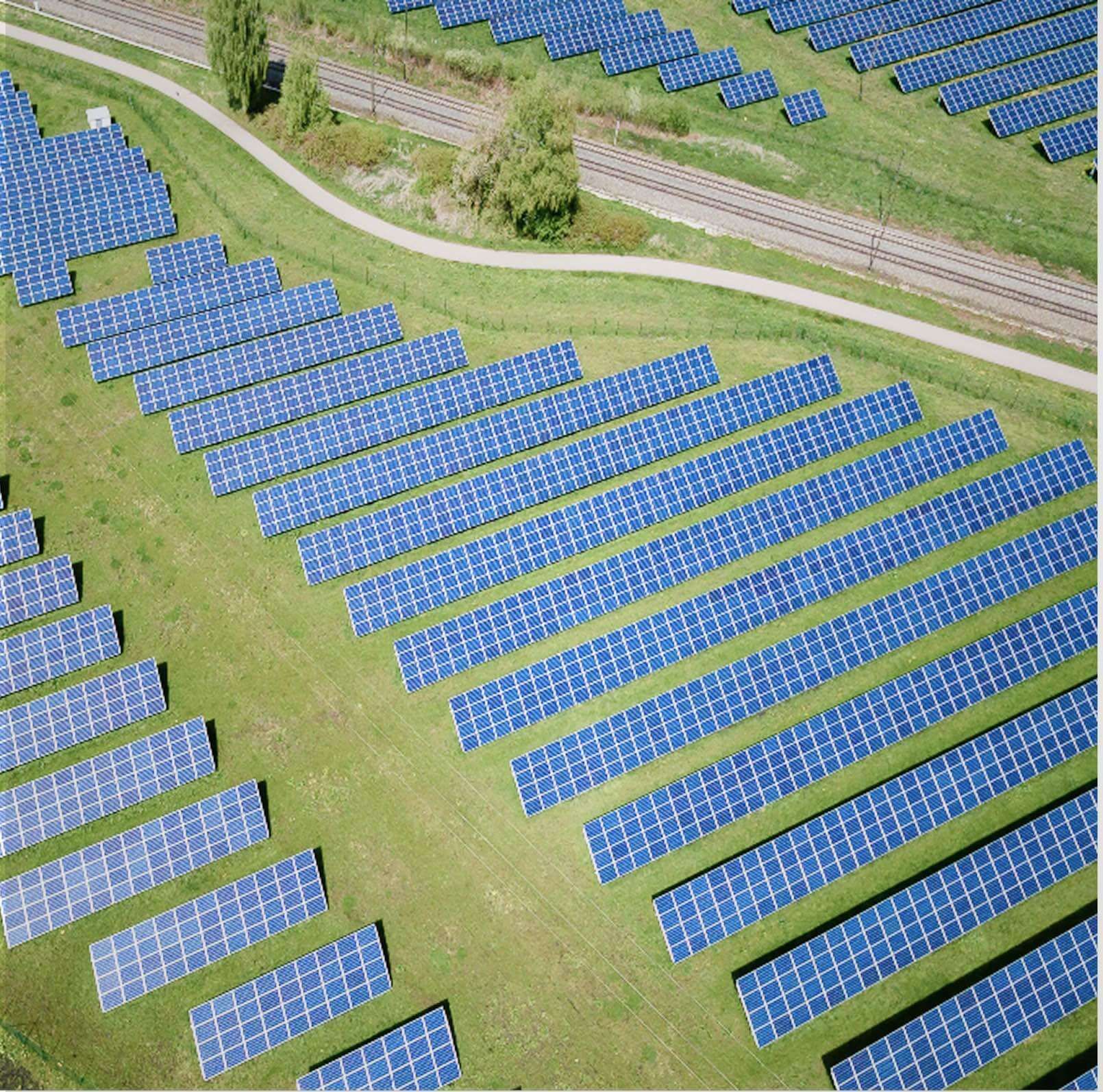
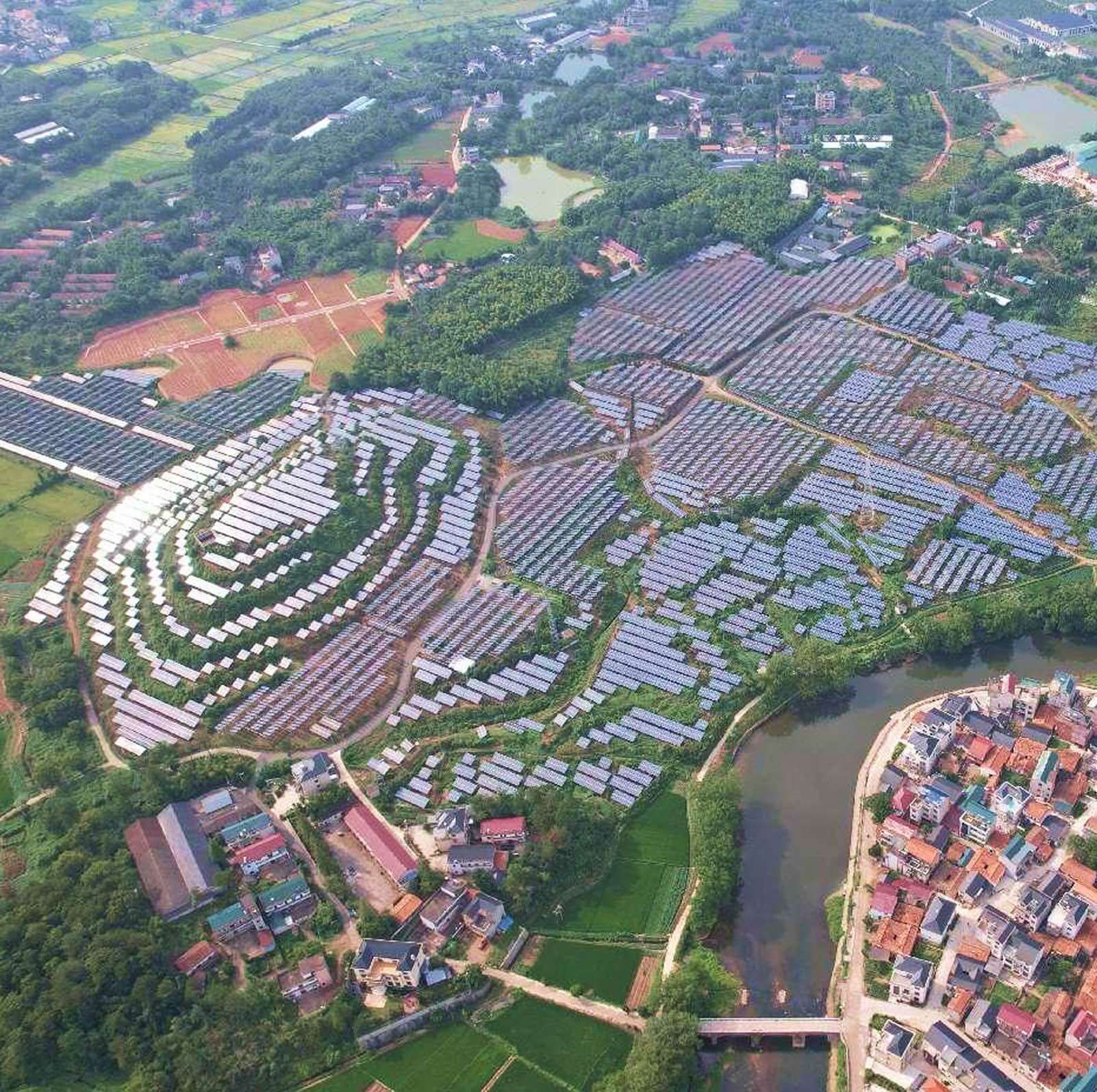
Leveraging our PV industrial expertise, FIRST has deployed distributed PV systems across eligible factory rooftops. Through our wholly-owned subsidiary ZHEJIANG FIRST NEW ENERGY DEVELOPMENT CO., LTD. and its subsidiaries, we have developed ground-mounted and distributed PV projects in Hangzhou, Jiangshan, Beijing, and other regions, embodying our "Solar for Solar" sustainability vision.
As of the end of , we owned MW of self-operated photovoltaic power generation systems and developed/externally held MW of PV systems. Based on coal-power equivalency calculations, these solar power installations collectively reduced approximately tons of carbon dioxide emissions.
Self-owned PV Systems
19.99
< MW >
Externally Developed and Held PV Systems
27.15
< MW >
CO₂ Emission Reduction
5.64
< tons >
*Data as of the end of
ESG Governance
We continue to refine our ESG management system, striving for ongoing optimization.
We have established an ESG governance framework with a clear structure, defined roles, and efficient operations, consisting of three levels: Decision-making, Management, and Execution, ensuring effective ESG implementation.
ESG performance is also a key indicator in evaluating the management team's performance, and we are exploring a mechanism linking ESG results to compensation, with appropriate assessment weights, ensuring ESG principles are integrated into all aspects of the company's operations.
Decision-making
Management
Execution
the Board of Directors
The Board of Directors holds the highest governance responsibility (decision-making level), overseeing ESG matters and providing top-level support for the company's sustainable development.The Board's key duties include setting ESG strategy, monitoring implementation, determining key ESG issues, and reviewing related reports. These tasks are carried out by the Strategy and Sustainability Committee, according to the "Board Strategy and Sustainability Committee Work Guidelines."
Social Responsibility Management System Declaration (SA8000)
The company and its entire management team recognize that adhering to international labor standards,
safeguarding labor rights, and fulfilling social responsibilities are fundamental conditions for ensuring the company's sustainable development,
and are also the expectations of stakeholders such as consumers, customers, the public, and the government.
The company commits to complying with national labor laws and regulations, adhering to international labor standards,
and other applicable industry standards and international conventions, continuously improving working conditions and employee benefits.
Integrating social responsibility management into the organic components of the company's daily operations,
and fulfilling social responsibilities is a necessary condition for the company to provide good products to meet customer needs.
The company appoints management to be responsible for the establishment, implementation,
and maintenance of the social responsibility management system, and extends this requirement to suppliers and subcontractors.
The company declares:
1. Prohibit and not support the use of child labor, and not accept any suppliers or subcontractors that use child labor or engage in forced labor.
2. Respect the freedom of employees, prohibit any form of forced or compulsory labor.
3. Provide safe and hygienic working and living conditions to ensure the safety and health of employees.
4. Promote labor-management cooperation, respect the freedom of association and collective bargaining rights of employees.
5. Provide an equal and fair working environment, prohibit any form of discriminatory behavior.
6. Respect the basic human rights of employees, prohibit and not support any form of behavior that insults human dignity.
7. Reasonably arrange production plans, reasonably arrange the working hours and rest and vacation of employees.
8. Provide reasonable wages and benefits, at least meeting the basic needs of employees.
9. Advocate commercial integrity, and eliminate corruption.
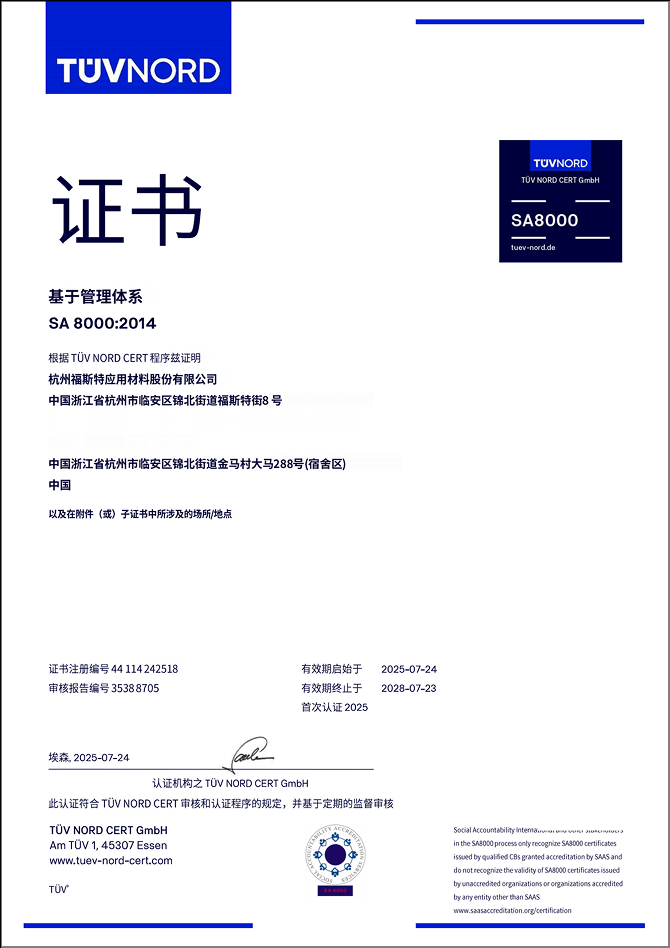
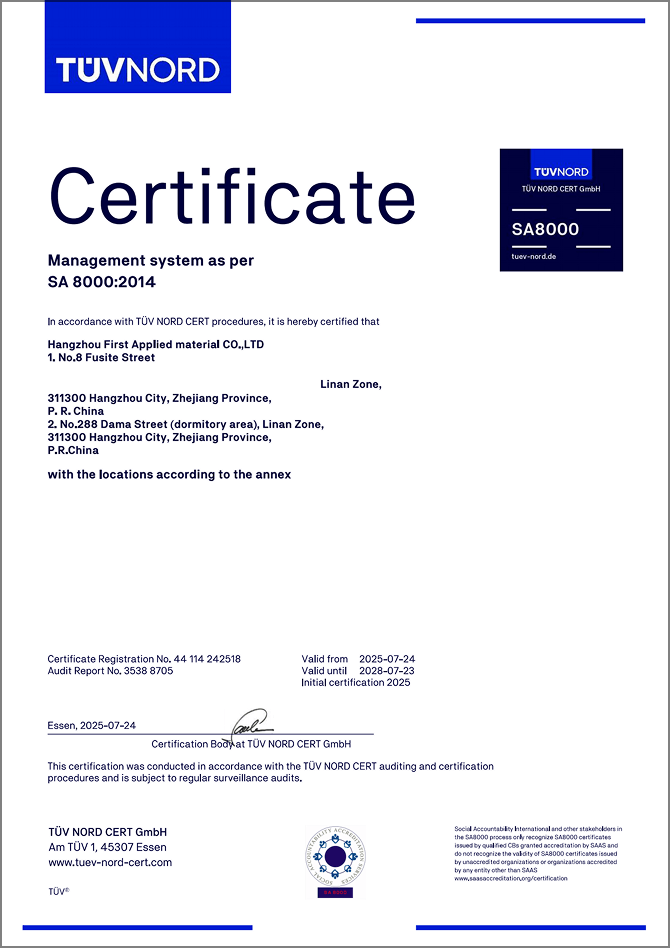
SA8000 Certificate
Annual Environmental, Social, and Governance (ESG) Reports
For more information on our corporate social responsibility initiatives, employee care, and professional development, please refer to our annual Environmental, Social, and Governance (ESG) reports.
Learn More
News Center
Hotline
+86 571 63812086
 WeChat
Subsidiary Sites
 浙公网安备 33018502001078号